
Family Name:
Caldicott
Given Names:
Helen Mary
Gender:
Female
Birth-Date:
7 August 1938
Death-Date:
NA
Marital Status:
Married 1962, Divorced 1988
Age Range:
30s to present day
Location:
VIC, Melbourne, SA, Adelaide, USA
Occupation:
Physician, Peace Activist
Primary Motivation:
Anti-Militarism, Anti-Nuclear Armaments and Nuclear Power
Reason for Court Appearance:
NA
Court Name and Location:
NA
Court Hearing Date:
NA
Court Outcome:
NA
Military Event:
WW11, Nuclear Armaments and Nuclear Power
Further Information:
Helen Mary Caldicott (nee Broinowski) was born on 7 August 1938 in Melbourne, Victoria. She was educated first at a state school then Fintona Girls School. She graduated from the University of Adelaide with a Bachelor of Medicine and Bachelor of Surgery in 1961. She worked as a general practitioner and pediatric intern and then founded a cystic fibrosis clinic at the Queen Elizabeth Hospital in Adelaide. During 1962 she married William Caldicott, a paediatric radiologist. They had three children. They divorced in 1988.
She has spent most of her life dedicated to peace activism and peace education, specifically in her opposition to nuclear weapons and their proliferation, depleted uranium munitions and nuclear power. She has said that her interest in the issues associated with nuclear holocaust after reading Nevile Shutes book, On The Beach, about nuclear holocaust, and the end of the world. The film based on the book was incidentally shot in her home city of Melbourne. Helen has many successes as a result of her peace activism and has gained widespread respect and recognition around the world. However, this has been against a formidable array of powerful interests of government and the military-industrial machine. Her life has been lived between Australia and the USA.
She was important in convincing the Australian government to sue France for its atmospheric testing of nuclear weapons in the Pacific which ended in 1971-1972 but continued underground. Australian unions, based on the advice from Helen about the health and military dangers of uranium, put a ban on the mining and export of uranium. This has since been resumed. During 1979 she left her medical career to devote herself full-time to what she called the insanity of the nuclear arms race and an increasing reliance on nuclear power. Whilst in the USA she successfully reinvigorated an organisation called Physicians for Social Responsibility. It was the time of a partial meltdown of a power plant at Three Mile Island. It educated the American public about the dire medical implications associated with nuclear power and a nuclear war. During 1980 she founded the Women’s Action for Nuclear Disarmament (WAND) in the USA. A major aim was to reduce government expenditure on nuclear weapons and nuclear power. Helen stood as an independent for the House of Representatives in 1990 but despite a good showing on primary votes she was unsuccessful Nevertheless, her preferences to the Labor candidate ensured the un-seating of the conservative incumbent. During 2002 Helen released a book called The New Nuclear Danger: George W Bush’s Military -Industrial Complex. It was just before the ill-fated second gulf war. Walter Cronkite described its message as, a timely warning, at a critical moment in world history, of the horrible consequences of nuclear warfare. During 2008 she founded the Foundation for a Nuclear Free Future. Her activism continues to the present-day. During 2014 Physicians for Social responsibility hosted a lecture by Helen called Fukushima’s Ongoing Impact, in Seattle, Washington State. Her website in 2024 reported that the Bulletin of Atomic Scientists has kept the Doomsday Clock at 90 seconds to midnight.
She has been widely acclaimed and widely criticized. Her critics describe her research as ‘sloppy’ with a scarcity of references to scientific papers, and consist what they describe as unsound claims. She is seen by some as an ‘alarmist’. She was dubbed as Henny Penny, a Cold War Zelig and a dupe for communists. Helen has stated that, nuclear industry apologists sow confusion about radiation risks and, in my view, in much the same way that the tobacco industry did in previous decades about the risks of smoking. In her autobiography titled, A Desperate Passion she says, I used to feel I had to save the world by myself. Now I see I am part of the world. I keep myself clear, not angry but pretty clear. I feel so good now.
Helen has published many books and articles on the dangers of nuclear power and nuclear weapons and appeared in numerous documentary films and other media. Her views on the nuclear industry were featured in a 1982 film “If You Love This Planet’. It was produced by the National Film Board of Canada. It won an Academy Award. The US Department of Justice declared the film to be political propaganda and ‘monitored’ its distribution. She has been the recipient of numerous prizes and awards for her peace activism against nuclear armaments and power. She has many honorary doctorates from a diverse group of universities throughout the world. Recognition includes, Humanist of the Year from the American Humanist Association, Peace in 1982, UN Association for Australia Peace Medal Award in 1985, Nobel Peace Prize awarded to the Physicians for Social Responsibility 1985. Nominated for the Nobel Peace Prize in 1986, Peace Abbey Courage of Conscience Award in 1992 from the John F Kennedy Presidential Library, induction to the Victorian Honour Roll of Woman in 2001, Lannon Foundation Prize for Cultural Freedom in 2003, Inaugural Australian Peace Prize of the Peace Organisation of Australia and during 2012 the Smithsonian Institution named Caldicott as one of the most influential women of the twentieth century.
Confirmatory Sources:
Denise Sutherland, Freelance Writer, Canberra, Australia, Caldicott, Helen (1938-)
https://www.encyclopedia.com/women/encyclopedias-almanacs-transcripts-and-maps/caldicott-helen-1938 accessed 1 February 2024
https://www.britannica.com/biography/Helen-Broinowski-Caldicott accessed 1 February 2024.
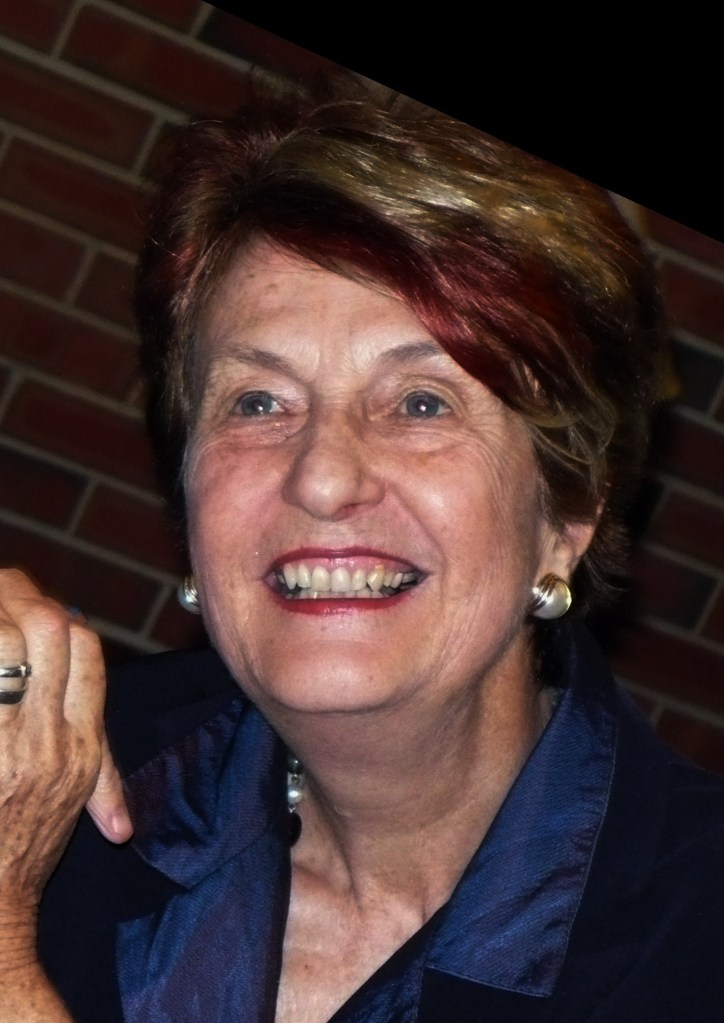
Helen Caldicott
Courtesy: Public Domain

