
Family Name:
Cairns
Given Names:
James Ford (Jim)
Gender:
Male
Birth-Date:
4 October 1914
Death-Date:
12 October 2003
Marital Status:
Married, 1939
Age Range:
45-60 years
Location:
VIC, Carlton, Sunbury, Lalor (electorate)
Occupation:
Policeman, Lecturer, Politician
Primary Motivation:
Peacemaker – opposition to conscription and the Vietnam War
Reason for Court Appearance:
Violation of Melbourne City Council By-Law
Court Name and Location:
Magistrates Court, Melbourne
Court Hearing Date:
April 1969
Court Outcome:
Charge withdrawn, because the by-law was repealed
Military Event:
National Service Act and the Vietnam War 1964-1972
Further Information:
Jim Cairns was born in Carlton, a working-class suburb of Melbourne, on 4 October 1914. His parents ran a dairy farm at Sunbury in Victoria. Two tragic events that must have impacted the boy growing up was the ‘disappearance’ of his father who Jim later learned had committed suicide, and the repossession of the dairy farm due to the great depression. Jim first attended the State Primary School at Sunbury and then made a three-hour trip to attend Northcote District Boys High School. He completed the Leaving Certificate. He attended the University of Melbourne and completed a Bachelor of Commerce 1947, Master of Commerce 1950 and a Doctor of Philosopher 1957. His doctorate was on Marxist and Socialist History. Jim was awarded a Nuffield Scholarship to Oxford University. He taught at the University of Melbourne. Prior to University studies he had joined the police force in 1933. He married Gwen Robb on 7 February 1939. He enlisted in January 1945 in the AIF and was discharged in 1946. Jim was not a pacifist.
He joined the Labor Party in 1947. At the 1955 federal election he won the House of Representatives seat of Yarra which he held until 1969 when it was abolished. He held Lalor from 1969 until 1977. Jim held a diverse number of appointments in Parliament and these included: Deputy Prime Minister, Treasurer, Overseas Trade and Deputy Leader of the Federal Parliamentary Australian Labor Party.
His life was dedicated to building a better society for all people. He promoted and opposed those aspects that impacted such a society. This included promoting better ties with Asia and with migrant communities and opposing apartheid, nuclear weapons and the white Australia Policy.
Jim Cairns is honoured as a peacemaker who held as fundamental the primacy of a person’s conscience. From the early 1960s until 1973 he opposed Australia’s involvement in the Vietnam War and military conscription for it. He was a man of great principle with oratory and organizing skills which enabled him to marshal opposition, both within the parliament and in society against conscription and the war
Jim believed as fundamental in the primacy of conscience. He told the House on the second reading of the 1968 amendments to the National Service Bill that he and the Australian Labor Party proposes to move an important amendment designed to protect conscientious objectors. He stated, I believe the individual conscience is the heart, the essence, the foundation not only of democracy but of a good society. I believe democracy cannot exist when a government refuses or fails to protect the individual conscience. The exercise of the individual conscience is freedom. This is where liberty begins, and where it can end. I do not hear with any pleasure the sneers that frequently come from Government supporters when they refer to the exercise of individual conscience by those who object to military service. Not once, but many times, we have witnessed the sneering attitude of honourable members opposite who have not themselves been game to discharge responsibilities that they are asking young people to discharge. Honourable members on the opposite side of the chamber sneer at others who are willing to run the risks that conscientious objectors take. I have seen honourable members opposite trooping off in step with everyone else, completely unconcerned about conscience. I believe the people who stand up for their consciences show more courage than do those who: simply follow the lead they are given and are content to do the same as everyone else. It is conscience with which we are concerned now – conscience in a matter that is deeply significant and not to be taken lightly. Freedom to exercise the responsibility of deciding must lie with the individual in any free and democratic society. No society can be free and democratic unless the individual conscience is given full rights and ample protection.
He opposed the Vietnam War. The Ministerial Statement of Attorney General Hughes on 14 April 1970 concerned the series of events called the Vietnam Moratorium Campaign that was led by Jim. The campaign aimed for the withdrawal of foreign troops from Vietnam and the repeal of the National Service Act1964 (NSA1964). Hughes described the campaign as a violation of the rule of law and as an illicit and dangerous use of power. He asserted it will result in violence. As a response Jim attempted to educate the ignorance of coalition concerning the tragic history of Vietnam. History. This was something he was very knowledgeable about. First invaded by the French and then the United States and its allies from as far back as 1847. With great passion he stated, And so the fighting went on. Between 1946 and 1970 perhaps as many as 250,000 armed Vietnamese have been killed and 350,000 civilians have also been killed by bullets and bombs in South Vietnam alone. As many as 90,000, mostly civilians, in North Vietnam have been killed. Much of the rest of the country has been burned and bombed half-way back to the Stone Age. In South Vietnam what is not some kind of den of corruption is a brothel. That is what has been done for Vietnam and that is why the opposition to the war is natural and understandable. Jim then castigates the coalition members when he said, It is not those who oppose the war who are in such a strange position that they should have to explain their conduct. It is not those who oppose the war who need some international system of obedience and orders, or rewards and benefits to explain their conduct. It is the supporters of the war in Vietnam who need to explain what they do. It is not they who are responding to orders from abroad. It is not those who act as they do because they feel that what is happening in Vietnam is wrong who should explain their conduct. It is not those who resist conscription for military service who need to explain their conduct. It is for those to explain their conduct who conscript others whilst they avoid any cost, inconvenience, or embarrassment for themselves, and who as well gain votes, profit and promotion from their militaristic attitudes and policies. Opposition to the war in Vietnam and to conscription for it is a normal and natural way of feeling about a situation which is possessed by tens of thousands of normal human beings who need no conspiracies from overseas or anywhere else to explain their conduct.
Jim published widely on Vietnam. These include: 1965 Vietnam: Is it truth we want? 1965 Living with Asia, 1968 Changing Australia’s Role in Asia, 1969 Eagle and the Lotus: western intervention in Vietnam 1847-1968, 1970 Science Kills: events leading up to the Melbourne Moratorium on 8 May, 1976 Vietnam: scorched earth reborn.
He opposed conscription and demanded NSA1964 be repealed. He stated during the second reading of the National Service Bill1964 that he and the Labor party, unanimously and resolutely opposes conscription because it is unjust, unnecessary and inefficient…conscription is justified when there is no alternative. We may note Jim did not rule it out entirely. However, he argued in this and further debates that elective conscription was unjust as the burden would fall on boys from poorer families. It was also unnecessary as the government produced no real clear and present danger’ to Australia. Vietnam was no threat to Australia. Indeed, he labelled it a cynical election technique. He also argued conscription was inefficient citing the military authorities desire to not have conscripts in their army. He dedicated at least ten years of his life to having the NSA1964 repealed. In April 1969 the Save Our Sons organisation recruited ‘big names’ to assist in handing out anti-conscription pamphlets. Twelve, including Jim, were arrested for breaking the City of Melbourne by-law 418. They were driven to the Magistrates Court in Russell Street. A few days later under immense pressure the Melbourne City Council repealed the by-law and dropped all charges against those arrested. As an important member of the incoming Labor Whitlam government, he saw this achieved in early 1973.
It has been suggested that Jim did not become leader of the Labor Party in the 1960s because of his passionate and principled involvement in the movement to abolish the NSA1964 and to end Australia’s participation in the Vietnam War. His contribution was immeasurable.
Jim died from complications of Pneumonia on 12 October 2003. Simon Crean, Leader of the Opposition (Labor) during the condolences for Jim’s passing, on 14 October 2003, stated that, Jim Cairns represented in perhaps its purest form the spirit of idealism that is such a part of the great Australian Labor Party. He was optimistic, trusting and gentle man whose strength of conviction, soothing voice and handsome looks made him a hero to many…we mourn his passing and here salute his contribution as a man of passion and commitment and a beacon for those who yearn for peace.
Confirmatory Sources:
Australian Biography: Jim Cairns, National Film and Sound Archive of Australia ID 420890, 1998. https://www.nfsa.gov.au/collection/curated/asset/99785-australian-biography-jim-cairns
Parliament of Australia, Parliamentary Handbook CAIRNS, the Hon. Dr James (Jim) Ford https://handbook.aph.gov.au/Parliamentarian/1V4
Parliament of Australia, House of Representatives, CAIRNS, Jim-Historic Hansard https://historichansard.net/hofreps/people/1V4/
Paul Strangio, 2002, Keeper of the Faith: a biography of Jim Cairns, Melbourne University Press.
The Australian National University, Biography-James Ford (Jim) Cairns-Labour Australia https://labouraustralia.anu.edu.au/biography/cairns-james-ford-jim-32945
Australian Living Peace Museum, Jim Cairns, http://www.livingpeacemuseum.org.au/s/alpm/page/jim-cairns
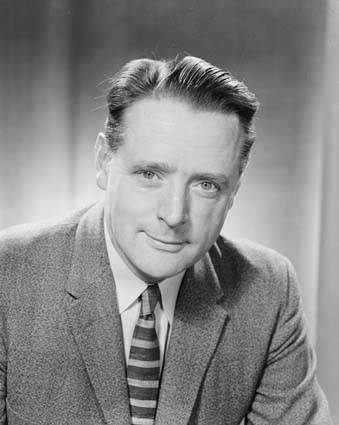
Jim Cairns 1962
 THE AUSTRALIAN PEACE HONOUR ROLL