
Family Name:
Vallentine
Given Names:
Josephine (Jo)
Gender:
Female
Birth-Date:
30 May 1946
Death-Date:
NA
Marital Status:
Married
Age Range:
30s to 70s
Location:
WA, Perth
Occupation:
Teacher, Parliamentarian
Primary Motivation:
Peace, Non-Violence and anti-nuclear armaments
Reason for Court Appearance:
[1] Trespass at Pine Gap Facility
[2] Trespass at Jabiluka uranium mine
Court Name and Location:
[1] Unknown, Alice Springs
[2] Unknown, Unknown
Court Hearing Date:
[1] October 1987
[2] 2000
Court Outcome:
[1] Jailed briefly for failure to pay trespass fine
[2] Jailed 7 days at Bandyup for failure to pay trespass fine
Military Event:
Nuclear armament, Iraq War 1990 and 2003
Further Information:
Josephine (Jo) was born 30 May 1946 at Beverley, a town east of Perth. Her parents were farmers. She received a Catholic education as a boarder at the Loreto convent. During 1964 she travelled as an exchange student to the United States of America (USA). She graduated from the University of Western Australia with a Bachelor of Arts and a Diploma of Education. She taught in Perth and then travelled to Europe and North America. Whilst in America during 1964 she attended a speech by Robert Kennedy. He asked the audience whether they could imagine a future when their countries would not war against each other. The overwhelming response was ‘No’. This experience impacted her and was a strong factor in her resolve to work for peace. It reinforced her strong belief that all people are valuable and have rights. But, also the reality that not all have opportunities.
During the Vietnam War period she was opposed to the war and was involved with the Vietnam Moratorium protests. During 1972 she embraced Quakerism. The Quakers are considered one of the ‘historic peace churches. She met her partner Peter Fry at a Friend’s Meeting House in Perth. They married had two children.
From the late 1970s Jo was active in a number of groups, which included OXFAM, the Aboriginal Treaty Support Group, Council of Civil Liberties, the Campaign to Save Our Native Forests and the Campaign Against Nuclear Energy. During 1984 she joined the Nuclear Disarmament Party and was elected to the Senate in December. She left the party and
became an Independent Senator for Nuclear Disarmament. She was re-elected on a ticket called the ‘Vallentine Peace Group’. During 1990-1992 she represented the Greens Party. Jo claimed in her maiden speech, 18 September 1985, that she was the first peace activist in the world to be elected to a national parliament on the single issue of nuclear disarmament. Perhaps the ‘trigger’ for her strong anti-nuclear activism was as a response to the deep anger she felt towards the decision of the Western Australian (WA) Premier, Charles Court that WA would be the first state in Australia to a nuclear power station. She has contributed to ensuring Australia remains nuclear station free to this day.
In the parliament she criticized defence spending and instead advocated for peace spending. She criticized those countries with nuclear arsenals who justified them on the grounds of deterrence as fraud. She claimed the alliance with the USA was damaging to Australian interests. During October 1987 she outraged many parliamentary members, especially of the ‘right’, by seeking an amendment to an address-in-reply to the Governor General’s speech that, the ANZUS alliance was not in the best interests of the Australian people.
Jo was willing to act on her conscience. She highlighted the terrible legacy of the British nuclear tests in Australia at Maralinga. Jo instigated a meeting of the Chernobyl survivors with indigenous Australian suffering from the nuclear testing at Maralinga. She exposed the fact that Australian uranium was used for military purposes despite repeated denials. She exposed the fact that there was a lack of safety protocols when nuclear powered shipping visited Western Australian ports. She advocated that Australia should follow the example of New Zealand in refusing entry of American warships to its ports. She was abused and vilified both in the parliament and without. Jo was arrested many times for her peace activism. During May 1987 she was arrested at a nuclear test site in Nevada USA. Later in October 1987 she was charged with trespass at Pine Gap and imprisoned as she refused to pay the fine. In 1988 and 2000 She was arrested at the Fremantle wharf. She protested at Clark Air Base in the Philippines during 1989. In 2000 she was charged for her protesting against uranium mining at Jabiluka, she served a 7 days jail because she refused to pay a fine.
After Iraq’s invasion of Kuwait in August 1990, Jo argued the proper response was to maintain economic sanctions against Iraq so as to achieve a negotiated settlement rather than war. She was totally opposed to Australia’s military participation and of the use of American military bases in Australia. She also opposed the 2003 Iraq War for the same reasons. Jo resigned from the Senate on 31 January 1992.
She then founded an ‘Alternative to Violence Project’ which shared non-violence skills with prisoners. During 1997 she participated in a Peace Pilgrimage against uranium mining at Jabiluka. She was arrested at the US-Australian-Jaan Talism Sabre military training exercise in Australia’s north during 2015.Mentoring of young activists has been important to this remarkable woman. In 2000, Jo was nominated for Australian of the year, and in 2005 she was one of six Australian women nominated for the Nobel Peace Prize. She has published Rationale for Civil Disobedience in 1988, and Quakers in Politics: Pragmatism or Principle in 1990 with Peter D Jones. The Australian newspaper listed her in 2023 as one of the top 100 most influential persons of Western Australia.
Confirmatory Sources:
Vallentine, Josephine (1946-), Senator for Western Australia, 1985-92. The Biographical Dictionary of the Australian Vol. 4, 1983-2002, Department of Senate, Canberra, 2017, pp. 532-536, author Bobbie Oliver. Online: https://biography.senate.gov.au/vallentine-josephine/ accessed 31 January 2024
The Encyclopedia of Women & Leadership in Twentieth -Century Australia: Josephine Vallentine, by Judy Lambert, ANU. https://womenaustralia.info/leaders/biogs/WLE0077b.htm accessed 31 January 2024
National Council of Churches in Australia, Jo Vallentine and Politics of Peace. https://www.ncca.org.au/files/Reports_and_Publications/DOV/SoP_5D_JO_VALLENTINE.pdf accessed 31 January 2024.
Jo Vallentine, ‘A Passionate concern for the future’, in Taking a Stand: Women in Politics and Society, J Scutt (ed.). Artemis, Melbourne, 1994.
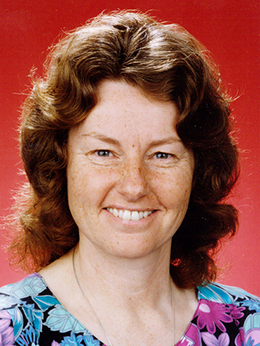
Courtesy: Biographical Dictionary of the Australian Senate.
 THE AUSTRALIAN PEACE HONOUR ROLL