
Family Name:
Mowbray
Given Names:
Graham Albert
Gender:
Male
Birth-date:
1947
Death-date:
Unknown
Marital Status:
Single
Age:
20 years old
Location:
NSW, Killara
Occupation:
University Student
Primary Motivation:
Draft Resister-Pacifism Religious
Reason for Court Appearance:
[1] Refusal to register for national service
[2] Refusal to attend medical examination
Court Name and Location:
[1] Unknown, NSW
[2] Court of Petty Sessions, Armidale
Court Hearing Date:
[1] 20 December 1968
[2] 23 May 1969
Court Outcome:
[1] Convicted and fined $40 plus costs $2
[2] Convicted and fined $40 and when Graham refused a recognizance to attend a future medical examination sentenced him to 7 days jail
Military Event:
National Service and Vietnam War 1964-1972
Further Information:
Graham Mowbray from Killara New South Wales (NSW) were triplets with his brothers David and Robert. All were Christians and active in the Methodist church. All were pacifists which was grounded in their Christianity. As such all would have had a good chance of full exemption from military service under the National Service Act 1964 (NSA) as a conscientious objector. Instead, each of them chose a response to the Act of non-compliance. Graham, with his brothers refused to register for national service for the July 1967 intake and informed Minister Bury of their non-compliance during August 1967. In 1969 Graham was a postgraduate in Rural Science of Wright College, New England University. He was convicted and fined $40 plus cost $2 for his refusal to register for national service on 20 December 1968. He paid the fine. He was convicted in the Armidale court of failing to attend the medical examination. He refused to enter into a recognizance to attend a further medical examination Graham served 7 days in the police cells at Armidale. Graham served the sentence whilst studying for his university examination.
Graham explained his continued non-compliance. To the NSA, in a statement to the court on 23 May 1969. He said, the basis of my objection is one of conscience. I am an active member of the Methodist Church, having been brought up in that church. As a Christian, and I hope as a thinking one, not to accept the tenets of the Church at face value but rather only after consideration, I am convinced that the example of the life of Christ demands pacifism as a tenet. of Christian action. Consequently, I reject the National Service Act and all for which it stands as wrong. He further stated that he could make an application under the Act for full exemption from military service as a conscientious objector. He and his brothers chose not to do so because, This it would be inconsistent to seek exemption only for myself and allow other men to be conscripted…thus special exemption for oneself under the provisions for conscientious objection would be wrong. He then gave a lengthy statement of why the NSA should be repealed. On 9 July 1969 Graham refused to obey a call-up notice. On the 18 March 1971 Minister Snedden referred him to a court to determine if he had conscientious objector view under reg 32A the NSA. The court granted Graham and his brother’s full exemption from military service as conscientious objectors. It is likely they had become too embarrassing to the government.
Confirmatory Sources:
Peacemaker, July/ August 1968, p.1; January/ February 1969, p.6; March/ April 1969, p.6; May/ June 1969, pp.1 and 6; November/ December 1969, pp.1 and 8; May/ June 1970, p.4; March/ April 1971, p10.
Sydney Morning Herald, 3 March 1970, p.10.
Bobbie Oliver, Hell No! We Won’t Go: Resistance to Conscription in Postwar Australia, Interventions, Melbourne, 2022, esp. pp. 130-133.
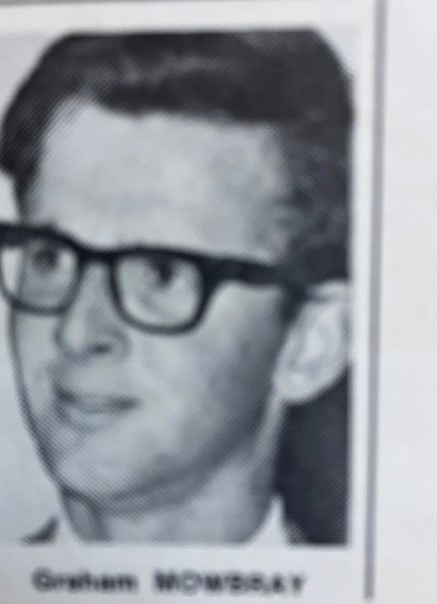
Courtesy: The Peacemaker, January/ February 1969, p.6.
 THE AUSTRALIAN PEACE HONOUR ROLL